Prambanan temple symbolism fills every tower, wall, and path. Builders did not design the compound only for beauty. Instead, they used shape, direction, and carving to express sacred ideas. However, these meanings are easy to overlook on a quick visit. Therefore, this guide explains the main symbols in simple terms. Moreover, it shows how to notice them as you walk.
The Sacred Mountain
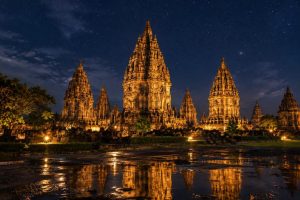
Hindu temple builders often modeled their work on Mount Meru, the mythical mountain at the center of the universe. Likewise, Prambanan’s tall towers echo that peak. As a result, the whole compound feels like a holy mountain rising from the plain. For more design background, read this guide on Prambanan temple architecture explained for curious travelers.
Three Gods and Three Worlds
The three main temples honor Brahma, Vishnu, and Shiva, known as the Trimurti. Brahma represents creation, Vishnu represents preservation, and Shiva represents transformation. In addition, the vertical structure reflects three levels of existence. The base stands for the human world, the middle for the realm of spirits, and the top for the realm of the gods.
Prambanan Temple Symbolism in the Layout
The plan follows a mandala, a sacred diagram that guides the eye toward a center. Consequently, the buildings grow taller and more important as you move inward. Furthermore, the main temples face east, which welcomes the rising sun. Because of this direction, each morning renews the temple’s sacred energy.
Animal Companions
Three smaller temples face the main buildings. Each one honors the animal companion of a god. For example, the bull Nandi serves Shiva, the eagle Garuda serves Vishnu, and the swan Hamsa serves Brahma. Meanwhile, these animals symbolize strength, speed, and wisdom. Together, they connect the divine to the natural world.
Symbols in the Carvings
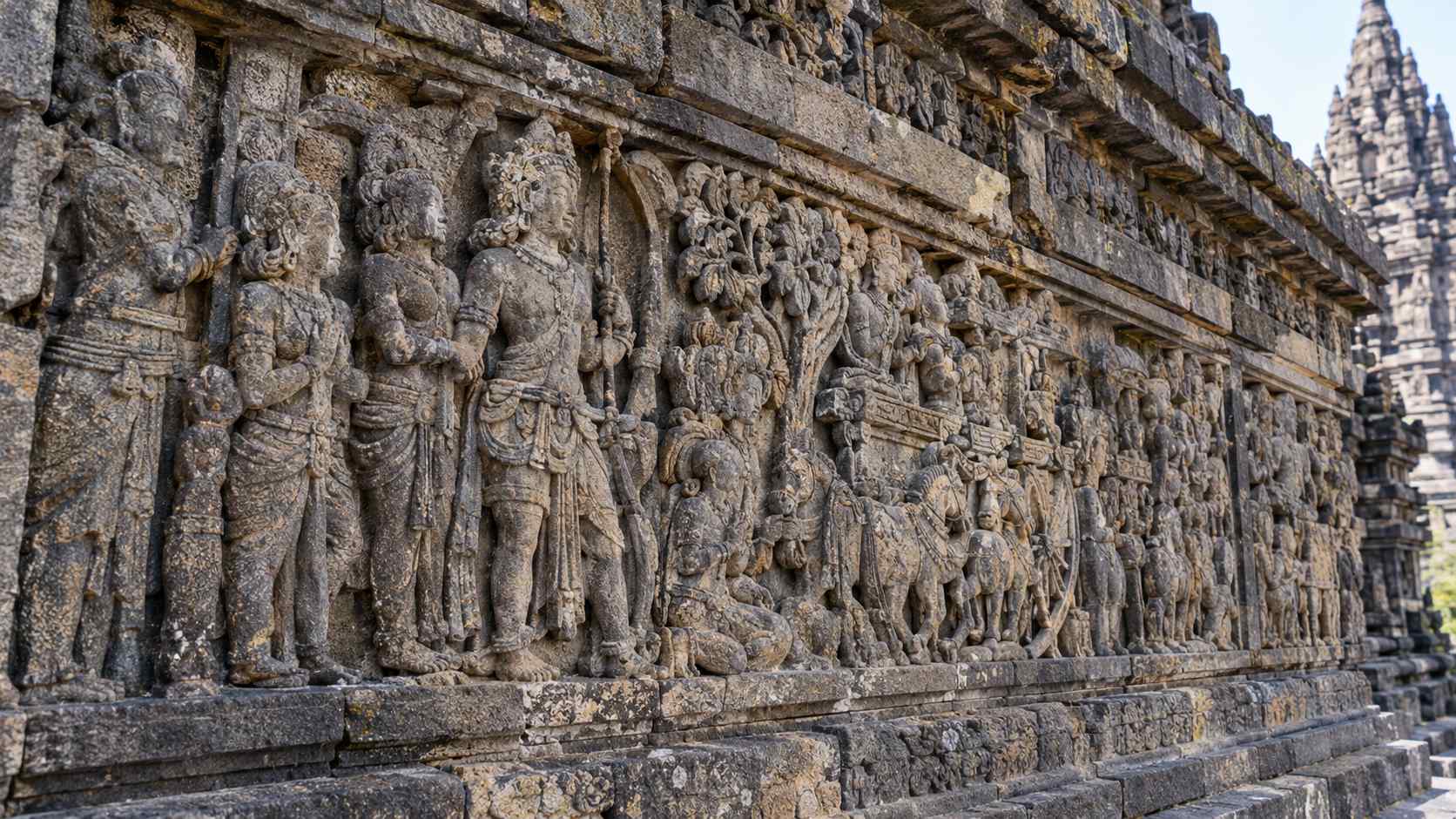
Many carved details carry meaning. Kalpataru trees, the trees of life, symbolize abundance and wishes fulfilled. Likewise, lions in niches guard the sacred space. In addition, kinnara and kinnari, half bird beings, stand for devotion and harmony. Even the lotus and the floral borders suggest purity and growth.
The Circle Path
Pilgrims once walked around each temple in a clockwise direction. This ritual, called circumambulation, shows respect and keeps the sacred center on the right. As a result, the walk itself becomes a form of prayer. Therefore, you can follow the same path to feel the meaning of the design.
Symbolism of Height and Light
Tall forms lead the eye upward, toward the divine. Moreover, the narrow spires catch sunrise light first, so the towers seem to glow. Consequently, early morning is a lovely time to appreciate this idea.
Tips for Noticing the Symbols
Visit early or late for soft light and fewer crowds. Wear light, modest clothing and closed shoes with good grip. Bring water, a hat, and sunscreen. Besides, ask a guide to point out hidden symbols, since many are small. Because access rules can change, confirm current details before you go.
Plan Your Visit with Local Experts
That is why Borobudur Tours can help. Their team offers organized packages, experienced guides, and flexible options for couples, families, and groups. As a result, you can learn the meaning behind each symbol.
Conclusion
Prambanan temple symbolism links stone, story, and belief into one sacred experience. Consequently, knowing the ideas behind the design makes every step richer. In addition, a guide helps you see what most visitors miss.
Ready to explore? Visit Borobudur Tours today and reserve your trip for a memorable day.