Prambanan Temple is one of the most famous attractions in Yogyakarta and one of the most important heritage sites in Indonesia. Located near the border of Yogyakarta and Central Java, this vast Hindu temple complex offers visitors a glimpse into the grandeur of ancient Javanese civilization. Travelers searching for Prambanan temple Yogyakarta experiences will find that Prambanan combines history, culture, architecture, and natural beauty in one remarkable destination.
Prambanan is located approximately 17 kilometers northeast of Yogyakarta city center. Its convenient location makes it easy to visit as part of a day trip from the city. Many travelers combine Prambanan with other popular destinations such as Borobudur, Sultan Palace, Malioboro Street, and Mount Merapi. This makes Yogyakarta one of the best regions in Indonesia for cultural tourism.
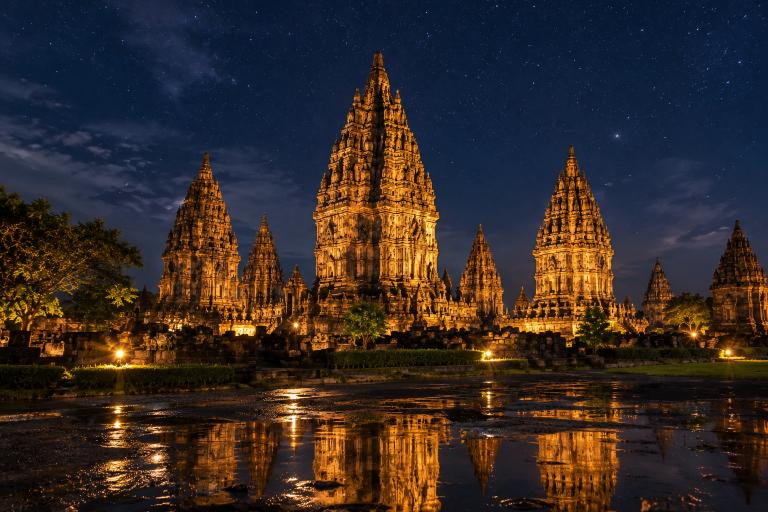
The temple complex was built during the 9th and 10th centuries under the Mataram Kingdom. It was designed as a major center of Hindu worship and dedicated to the Trimurti: Shiva, Vishnu, and Brahma. The central Shiva Temple is the tallest structure in the complex, reaching about 47 meters in height. Its towering form dominates the landscape and serves as the spiritual heart of Prambanan.
Prambanan is not a single temple but a large sacred area containing hundreds of structures. The temples are arranged in concentric zones, with the most sacred buildings placed at the center. This layout reflects Hindu ideas about the universe and spiritual hierarchy. It also shows the advanced planning and engineering skills of ancient Javanese builders.
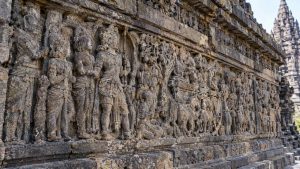
One of the most impressive features of Prambanan is its detailed stone carving. The walls of the main temples are decorated with reliefs from the Ramayana epic. These carvings tell the story of Prince Rama, Sita, and Hanuman. Visitors can follow the narrative as they walk around the temple, making the experience both educational and visually stunning.
Prambanan is also connected to the legend of Roro Jonggrang. According to local tradition, a princess was turned into stone after trying to stop a prince from completing one thousand temples in one night. This legend gives the temple a mystical character and explains its alternative name, Candi Roro Jonggrang. The story remains an important part of Javanese folklore and cultural identity.
The temple complex experienced decline after earthquakes, volcanic eruptions, and political changes in the early 11th century. Many structures collapsed, and the site was eventually abandoned. It was rediscovered in the 17th century, and restoration efforts have continued for decades. In 2006, a powerful earthquake in Yogyakarta caused further damage, leading to renewed conservation work.
In 1991, Prambanan Temple Compounds was inscribed as a UNESCO World Heritage Site. This recognition highlights the temple’s outstanding cultural and architectural value. The protected area also includes nearby temples such as Sewu, Lumbung, and Bubrah. The presence of Hindu and Buddhist monuments in the same region reflects the religious diversity of ancient Java.
The best time to visit Prambanan is in the morning or late afternoon. Morning visits offer cooler temperatures and softer light, while late afternoon creates dramatic golden views around the temple towers. Visitors should wear comfortable shoes, bring drinking water, and follow the site’s preservation rules.
Prambanan is more than a tourist attraction. It is a living symbol of Yogyakarta’s cultural heritage and Indonesia’s ancient history. Its towering shrines, detailed carvings, and sacred atmosphere make it one of the most rewarding destinations in the region. For anyone visiting Yogyakarta, Prambanan is an experience that should not be missed.